Real crime mystery · FBI cold case · Official evidence images
The Man Who Jumped From a Plane With $200,000 and Vanished
The DB Cooper mystery began with a one-way ticket and ended somewhere in the darkness above Washington.
Chapter One
The DB Cooper Mystery Began With a False Name
The man boarded the plane under a name that was probably not his.
The world would later remember him by a name he never used.
On November 24, 1971, a quiet man approached the Northwest Orient Airlines counter in Portland, Oregon.
He paid cash for a one-way ticket to Seattle.
The name written on that ticket was Dan Cooper.
A reporting error later transformed Dan into “D.B.” The incorrect name survived long after every other detail became uncertain.
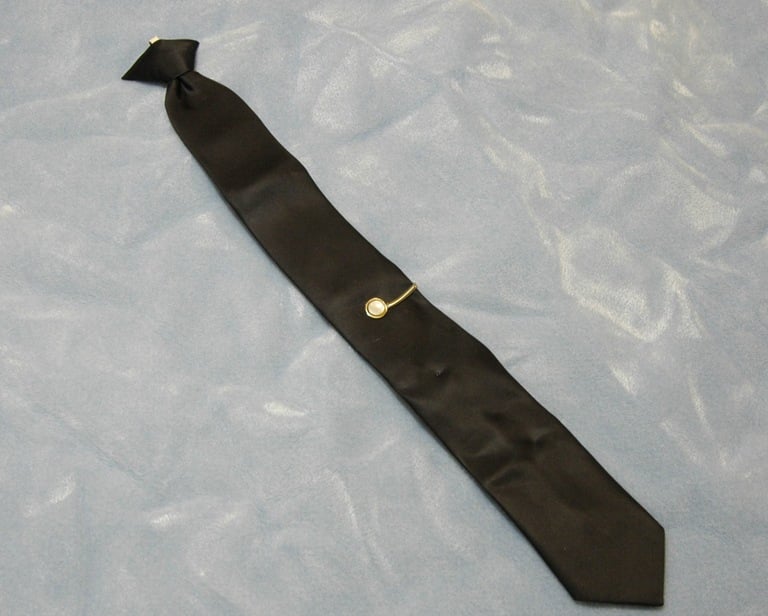
Cooper appeared to be in his mid-forties. He wore a business suit, a white shirt, loafers, and a black tie secured with a small tie clip.
Nothing about him demanded attention.
That may have been the first part of the plan.
He took his seat aboard Northwest Orient Flight 305 and ordered a bourbon and soda while the aircraft waited to depart.
Shortly after three in the afternoon, he handed a note to a flight attendant.
She initially assumed it contained his telephone number.
Cooper quietly informed her that she should read it.
The note said he had a bomb.
When she sat beside him, Cooper opened a briefcase far enough to reveal wires and several red-colored objects.
Whether the device was real has never been established.
The threat was real enough.
Cooper demanded four parachutes and $200,000 in twenty-dollar bills.
He remained controlled while the message moved from the cabin to the cockpit and then to authorities on the ground.
The passengers were told that a mechanical problem would delay their arrival.
Most of them had no idea that the ordinary-looking man near the rear of the plane had just begun one of the most famous crimes in American history.
Chapter Two
The Exchange in Seattle
When Flight 305 reached Seattle, the aircraft remained on the ground while Cooper’s demands were delivered.
The money came in twenty-dollar bills whose serial numbers had been recorded.
Four parachutes were brought to the plane.
In exchange, Cooper released all thirty-six passengers.
Several crew members remained aboard.
Cooper instructed the pilots to fly south toward Mexico City.
He wanted the aircraft kept below ten thousand feet. He also wanted the rear stairs lowered after takeoff.
The Boeing 727 had an unusual feature: a staircase that could extend from beneath the tail.
Somewhere after eight that evening, between Seattle and Reno, Cooper used it.
He tied the ransom into a bag, attached a parachute, and jumped into the darkness.
Below him were forests, rivers, uneven ground, rain, and almost no light.
When the aircraft later landed safely, Cooper was gone.
So were most of the ransom bills.
No confirmed body, landing site, or escape route was discovered.
The search was given the code name NORJAK, short for Northwest Hijacking.
The FBI searched possible landing areas, examined the aircraft, interviewed witnesses, and followed leads across the country.
But the passenger in the business suit had disappeared as completely as the false name on his ticket.
Chapter Three
Five Clues That Refused to Solve the Case
1. The one-way ticket
Cooper bought his ticket with cash and used the name Dan Cooper.
The ticket proved where the crime began, but it revealed nothing reliable about who had purchased it.
2. The black tie
Cooper removed his black clip-on tie before the jump and left it inside the aircraft.
The tie later yielded a DNA sample, but it did not produce a definitive identification.
It remains one of the most important physical objects connected to the man himself.
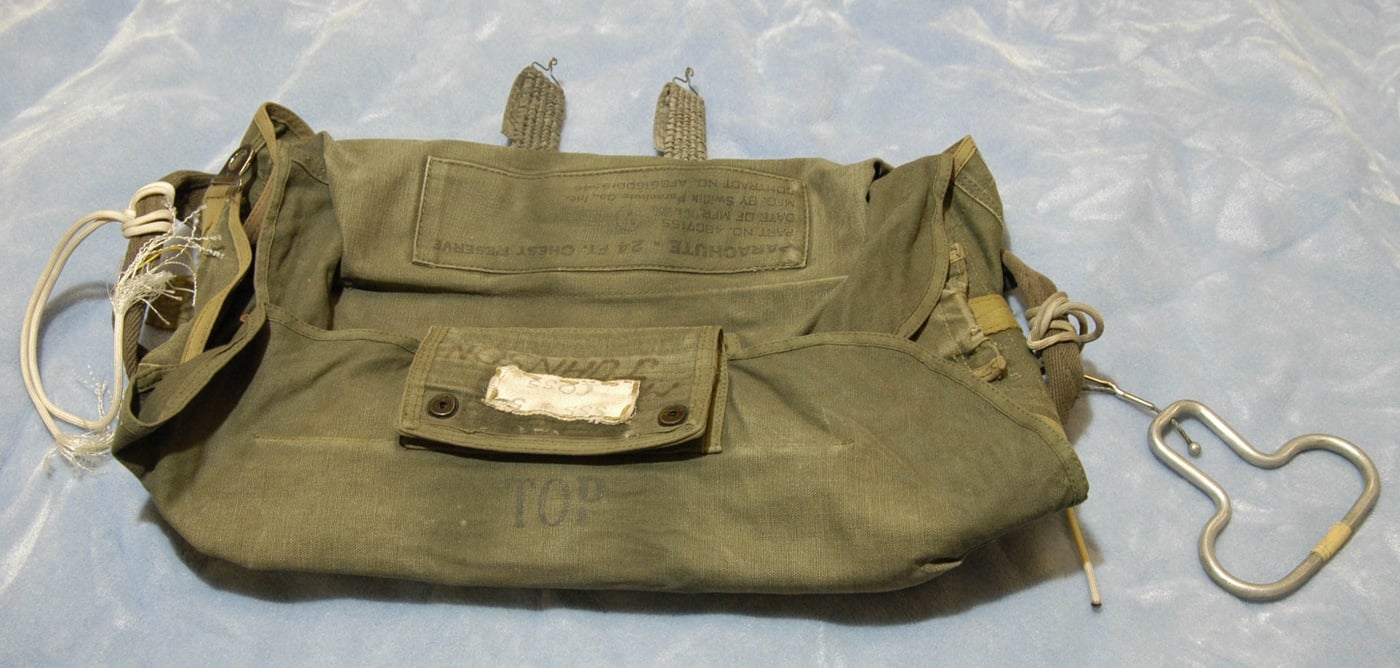
3. The parachutes
Cooper asked for four parachutes and jumped with two.
One of the chutes he took was a training reserve that had been sewn shut.
FBI investigators later argued that an expert skydiver would have recognized the problem and would not have chosen to jump at night, in bad weather, wearing loafers and business clothing.
That raised a new question.
Was Cooper a skilled professional—or a man whose plan succeeded because nobody expected him to survive it?
4. The recovered ransom money
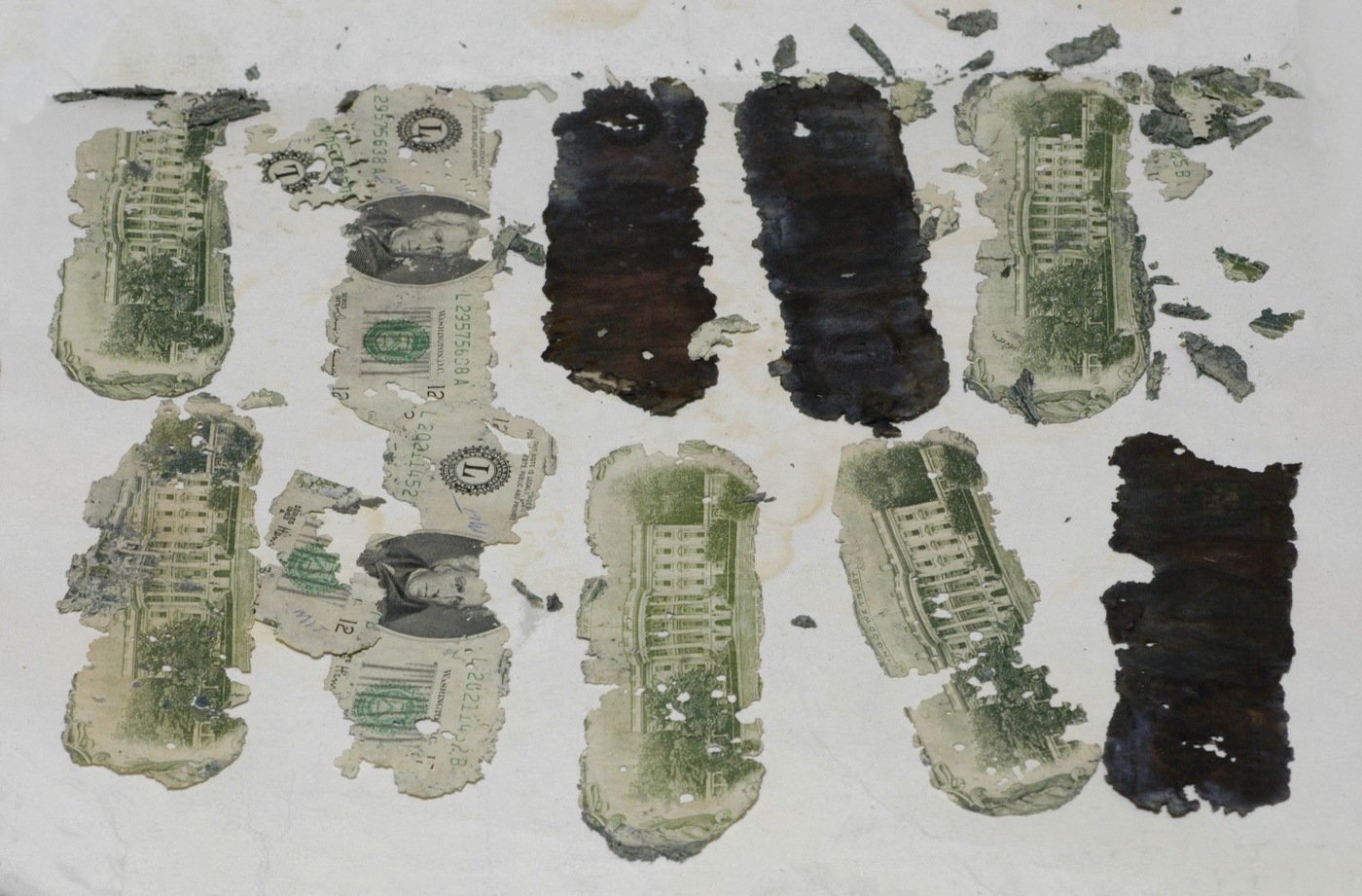
For nine years, none of the ransom money was publicly known to have surfaced.
Then, in 1980, eight-year-old Brian Ingram found damaged bundles of twenty-dollar bills on a sandbar beside the Columbia River.
The serial numbers matched Cooper’s ransom.
The discovery amounted to $5,800.
It proved that at least some of the money had reached the river.
It did not explain how it got there.
5. The conflicting face
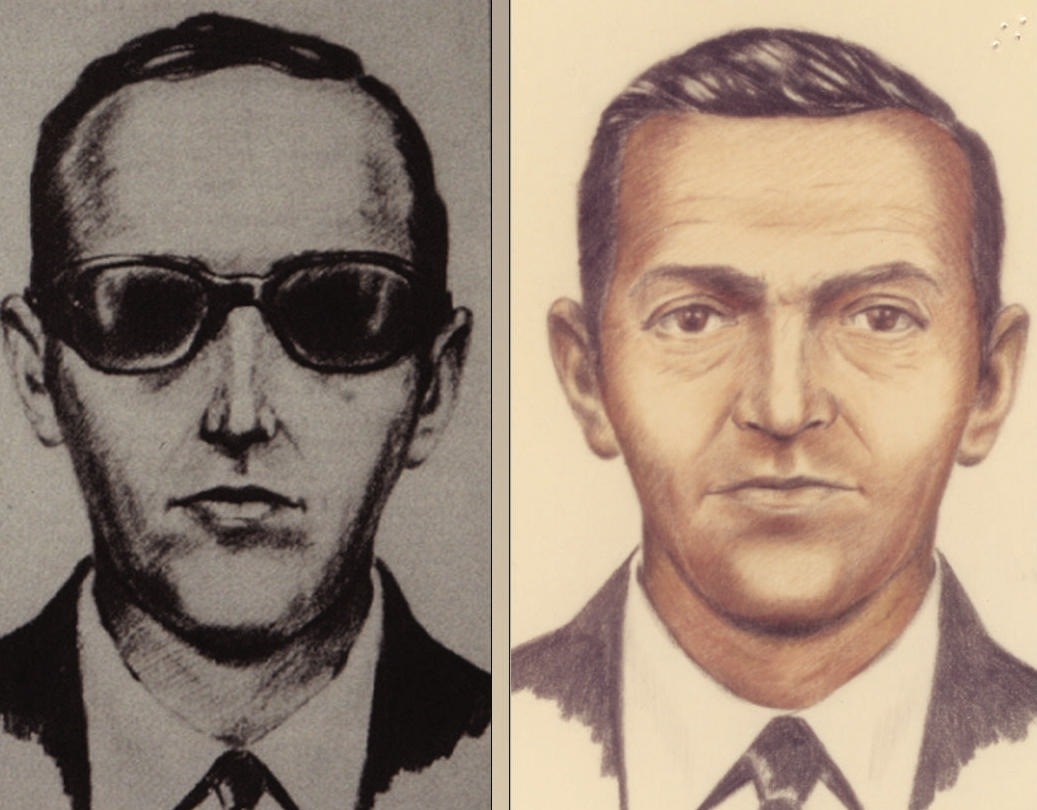
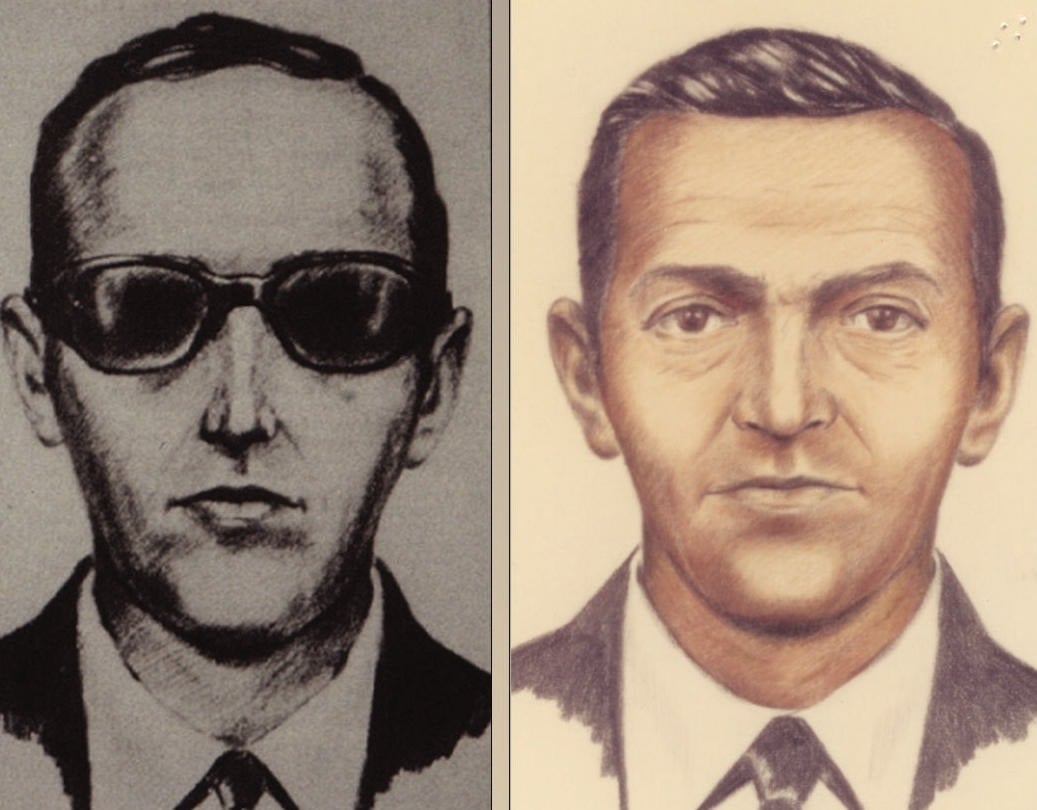
Witnesses helped investigators create artist sketches of the hijacker.
But eyewitness memory is imperfect, especially after a frightening and unusual event.
Descriptions varied enough to leave room for decades of competing suspects.
By the fifth anniversary of the crime, the FBI had considered more than eight hundred suspects.
One famous possibility was Richard Floyd McCoy, who carried out a similar parachute hijacking less than five months later.
The FBI ruled McCoy out, citing differences from witness descriptions and other evidence.
Numerous other names have been proposed.
None has been proved beyond reasonable doubt.
Final Chapter
Did D.B. Cooper Survive?
The most haunting question is not necessarily Cooper’s identity.
It is whether there was anyone left to identify.
The FBI has long considered the possibility that Cooper died during or shortly after the jump.
The parachute could not be steered. The conditions were dangerous. His clothing was unsuitable for a rough landing in a wooded area.
Yet extensive searches failed to find his body, parachute, bag, or most of the money.
If he died, the wilderness hid him with extraordinary completeness.
If he survived, he appears to have resisted the temptation to spend money whose serial numbers were known.
In 2016, the FBI redirected resources from the active investigation to other priorities.
The agency said that decades of tips, theories, descriptions, and new technology had failed to produce proof identifying the hijacker.
It still invited people possessing specific physical evidence connected to the parachutes or ransom money to contact the FBI.
Later reports about a newly discovered parachute renewed public interest, but no official confirmation has established that it belonged to Cooper.
Additional FBI records released to the public have added detail to the investigation without providing a final answer.
More than five decades after Flight 305 landed without him, the evidence still forms an unfinished portrait.
A ticket bought with cash.
A black tie abandoned on a seat.
A parachute descending into rain.
Damaged money beside a river.
And two sketches of a face that may belong to a man who never expected anyone to learn his real name.
The first clue in the D.B. Cooper mystery may also be its final warning: the name remembered by history was never his.
The next real case is coming
Follow The Second Envelope
Follow our Facebook page and subscribe for real crime mysteries, official evidence, unsolved identities, and the clue investigators could never explain.
More Mysteries From The Second Envelope
Prefer fictional psychological suspense? Read the missing sister mystery hidden inside a detective’s family album .
Visit The Second Envelope for more hidden evidence and mystery stories.