The Tent by the Lake

The Lake Bodom murders began with four teenagers pitching a tent beside a quiet Finnish lake in June 1960.
By morning, three of them were dead.
One was still alive.
The tent had been slashed.
The victims had been attacked with a sharp weapon and a blunt object.
Some belongings were missing.
The murder weapons were gone.
And the only survivor could not tell police who had done it.
How could someone attack four teenagers beside Lake Bodom, leave one survivor behind, and disappear without ever being conclusively identified?
• • •
The Lake Bodom Murders Began on June 5, 1960
Lake Bodom lies in Espoo, west of Helsinki.
In the summer of 1960, four teenagers went there to camp.
The two girls were Maila Irmeli Björklund and Anja Tuulikki Mäki.
Both were 15.
The two boys were Seppo Antero Boisman and Nils Gustafsson.
Both were 18.
They set up a tent near the water.
The group spent the evening together and eventually went to sleep.
Then, sometime during the night or early morning, someone approached the campsite.
By morning, Irmeli, Anja and Seppo were dead.
Nils was badly injured.
He had suffered serious blows and facial injuries.
He survived.
That made him the only person known to have been inside the tent who might have been able to describe what happened.
But his memory of the attack was limited.
• • •
The Tent Became the Most Important Piece of Evidence
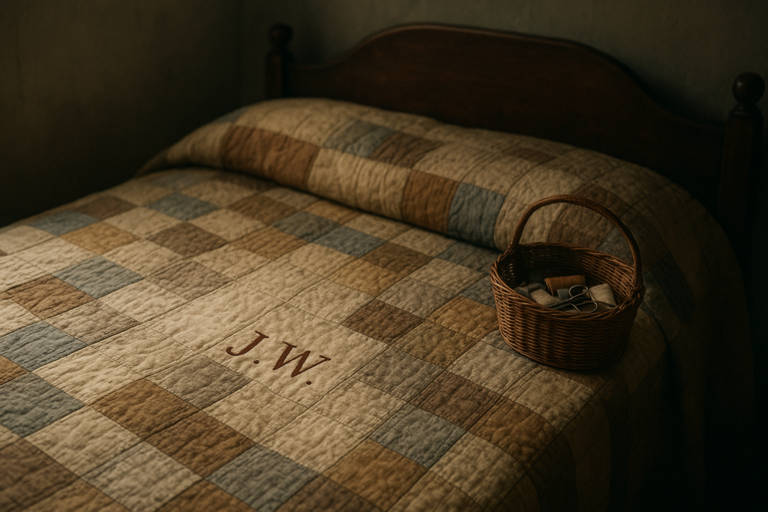
The tent was badly damaged.
Investigators found cuts and tears in the fabric.
The victims had suffered both stabbing injuries and blunt-force trauma.
Police believed at least one sharp instrument and one heavy blunt object were involved.
Neither weapon was conclusively recovered.

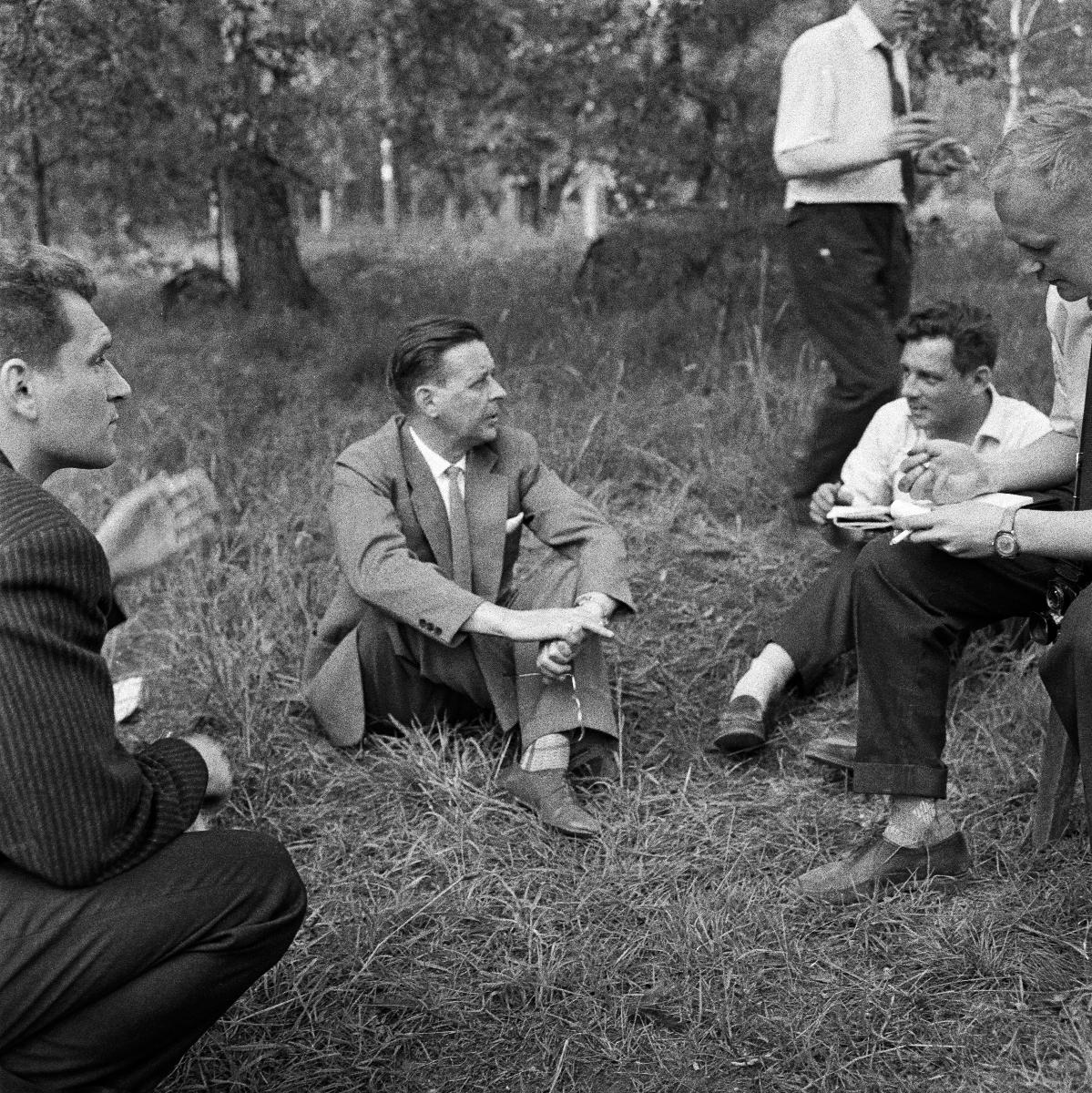
The investigation photograph above is part of the real historical record of the case.
It shows investigators working around the murder area only a day after the attack.
But in 1960, police did not have modern DNA testing.
The scene also attracted large numbers of curious people.
That complicated preservation of footprints and other traces.
From the beginning, investigators had physical evidence but no clearly identified attacker.
• • •
Some Belongings Were Missing
Investigators noticed that personal items connected to the teenagers were missing.
Some clothing and other belongings could not immediately be accounted for.
Footwear later became particularly important.
Shoes associated with Gustafsson were examined again decades later using modern forensic techniques.
The positioning of belongings around the campsite also generated debate.
Had the attacker searched the area?
Had objects been moved after the murders?
Did robbery play any role?
No single theory could explain every detail.
• • •
Police Searched the Water
The lake itself became part of the investigation.
If the attacker had thrown a weapon or missing belongings into the water, Lake Bodom could have hidden crucial evidence.
Police searched the shoreline and the lake.
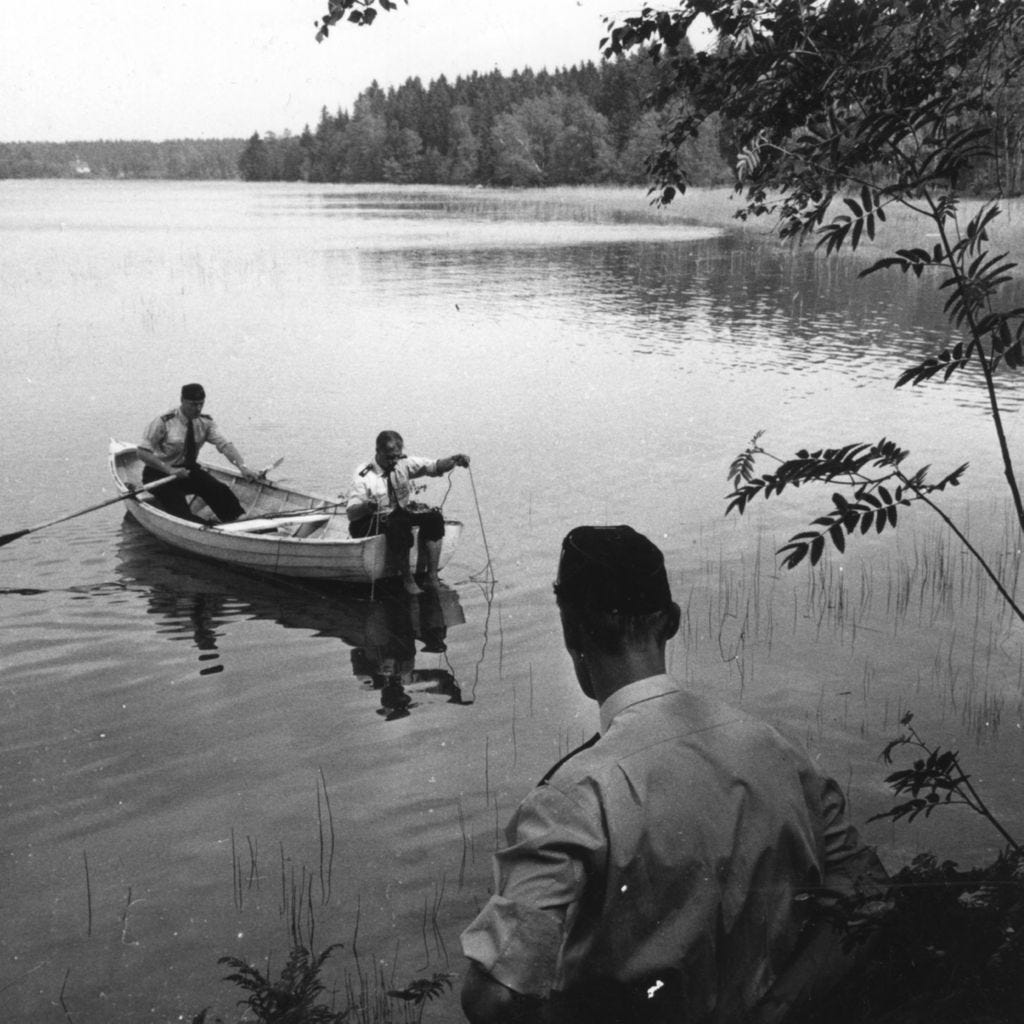
The search did not produce a murder weapon that conclusively solved the case.
That left investigators relying on the damaged tent, the victims’ injuries, witness statements and physical traces from the scene.
• • •
The Only Survivor Became the Most Important Witness
Nils Gustafsson was found alive.
His injuries were serious.
He had facial fractures and other trauma.
He later said he could not remember the attack itself.
During the early investigation, police tried hypnosis in an attempt to recover more memories.
Gustafsson described a possible attacker while hypnotized.
But hypnosis could not establish who committed the murders.
Police still lacked a suspect they could prove was responsible.
• • •
Suspects Came and Went
The Lake Bodom murders generated suspects for decades.
Some were local men.
Others became part of public speculation because of unusual behavior or reported connections to the area.
Hans Assmann became one widely discussed name.
Kiosk keeper Karl Gyllström became another.
But suspicion is not proof.
Neither man was convicted of the murders.
Other names were investigated over the years.
No prosecution produced a killer.
• • •
Then Police Arrested the Survivor
More than four decades after the killings, the case changed dramatically.
In 2004, police arrested Nils Gustafsson.
The only survivor was now accused of murdering the other three campers.
Prosecutors argued that modern forensic testing supported their case.
Evidence involving blood found on Gustafsson’s shoes became particularly important.
Prosecutors theorized that an argument had occurred and that Gustafsson had killed the others before staging parts of the scene.
Gustafsson denied the accusation.
The case went to trial in 2005.
Espoo District Court rejected the prosecution’s case.
Gustafsson was acquitted of all charges.
The prosecution did not appeal.
Nils Gustafsson was prosecuted decades after the murders, but he was acquitted. He should not be presented as the killer.
• • •
The Lake Is Still There
The crime scene changed with time.
But Lake Bodom remains.
It is still the physical location around which the entire case revolves.
Decades have passed.
The tent survived as evidence.
The investigation survived.
Theories survived.
But no one has been convicted.
The murder weapons have never been conclusively identified.
And the name of the attacker remains unknown.
• • •
What the Evidence Still Cannot Tell Us
The attack has been studied from almost every angle.
The blood patterns.
The missing belongings.
The damaged tent.
The survivor’s injuries.
The position of objects around the campsite.
The possibility of an unknown outsider.
Theories have been built around each detail.
But the 2005 trial demonstrated the difference between suspicion and proof.
Police believed they had a case.
The court decided they did not have enough evidence to convict.
The result left investigators with the same central mystery.
Three victims.
One survivor.
One damaged tent.
No proven killer.
• • •
Lake Bodom Murders: Reality Check
Verified: Maila Irmeli Björklund, Anja Tuulikki Mäki and Seppo Antero Boisman were killed beside Lake Bodom on June 5, 1960.
Verified: Nils Gustafsson survived with serious injuries.
Verified: The four teenagers were camping in a tent.
Verified: The attack involved sharp-force and blunt-force violence.
Verified: The tent was preserved and later reexamined.
Verified: Gustafsson was prosecuted decades later.
Verified: He was acquitted in 2005.
Verified: No one has been convicted of the murders.
Not established: That any frequently discussed suspect committed the crime.
Still unresolved: Who attacked the four campers and why.
The Tent Never Gave Up a Name
The Lake Bodom murders remain powerful because the basic story is so simple.
Four teenagers went camping.
They slept beside a lake.
Someone approached the tent.
Three died.
One survived.
The tent remained.
The blood remained.
The lake remained.
The investigation remained.
But the most important answer never appeared.
Who was outside the tent that night?
• • •
Which Clue Would You Reopen?
The tent. The missing belongings. The shoes. The survivor’s injuries. Or the lake search.
Which part of the case would you test again today?
More Mysteries From The Second Envelope
Follow The Second Envelope
Real cases. Real evidence. Questions that still have no answer.
Sources and Image Credits
Yle — Nils Gustafsson acquittal
Wikimedia Commons — actual 1960 tent
Wikimedia Commons — actual 1960 investigation
Wikimedia Commons — Lake Bodom