The House After Midnight
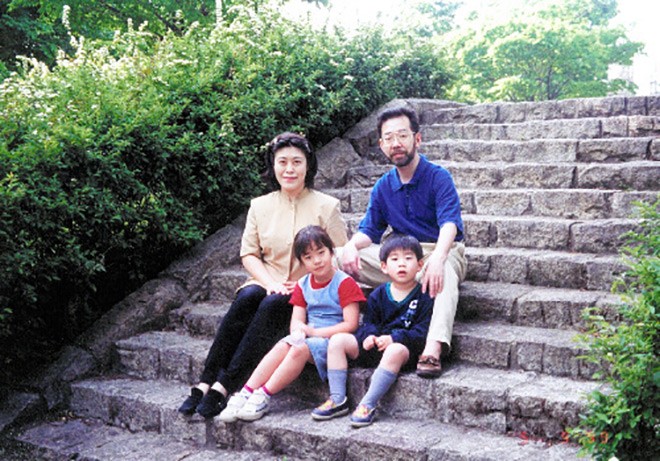
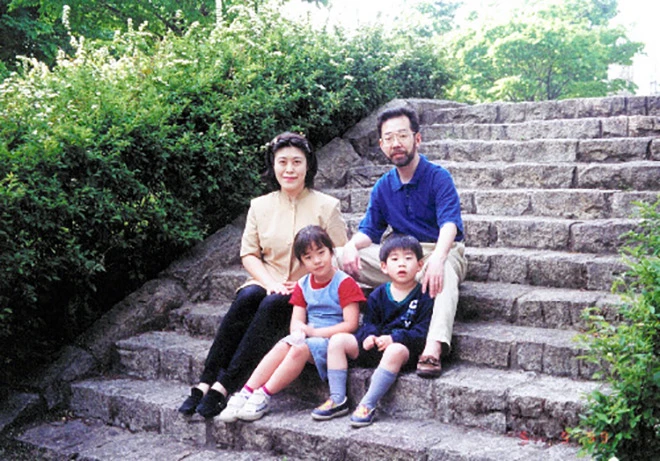
The Setagaya murders began on the night of December 30, 2000, inside a family home in western Tokyo.
Four people were inside.
Mikio Miyazawa.
His wife, Yasuko.
Their eight-year-old daughter, Niina.
And their six-year-old son, Rei.
By the following morning, all four were dead.
But what investigators discovered inside the house made the case even harder to understand.
The person responsible had not disappeared without leaving a trace.
He left blood.
Fingerprints.
Footwear impressions.
Clothing.
A bag.
Gloves.
And other physical evidence.
Police had enough material to build an unusually detailed picture of the unknown man.
They just could not find his name.
How could an offender leave so much physical evidence inside one house and remain unidentified for more than twenty-five years?
• • •
The Setagaya Murders Began Just Before New Year’s Eve
The Miyazawas lived in Kami-soshigaya, part of Tokyo’s Setagaya Ward.
It was a residential area beside Soshigaya Park.
But by 2000, the immediate neighborhood had become unusually sparse.
The park was expanding.
Many homes in the area had already been vacated.
Tokyo Metropolitan Police say that only four houses remained in the immediate area when the murders occurred.
To the west of the Miyazawa home ran the Senkawa River.
To the east and south was parkland.
The Komazawa University baseball ground lay to the north.
The family spent December 30 together.
They had gone shopping earlier in the day.
That evening, they were at home.
Police place the crime from around 11 p.m. on December 30 until the early hours of December 31.
By morning, Yasuko’s mother could not reach them.
She went to the house.
Inside, she found the family.
Rei had been strangled.
Mikio, Yasuko and Niina had suffered fatal knife wounds.
Police now had a quadruple murder investigation.
Then they began examining what the killer had left behind.

• • •
Someone Entered the House
Investigators examined how the offender may have gained access.
Police have focused on an upstairs bathroom window facing the park.
The window could be reached from outside.
A screen associated with it was found displaced.
Investigators believe the offender may have climbed into the house through that area.
If so, he had approached a family home from the darker park side rather than simply walking through the front door.
But knowing a possible entry point did not explain why the Miyazawas had been selected.
Was this robbery?
Was the family specifically targeted?
Did the offender know them?
Had he been watching the house?
Police have examined possibilities for decades.
No motive has been conclusively established.
• • •
The Killer Was Injured
During the attack, the offender appears to have injured his hand.
That mattered enormously.
Blood believed to belong to the killer was recovered at the scene.
Tokyo police identify his blood type as A.
Investigators also recovered fingerprints.
They found footwear impressions.
These were not vague witness memories.
They were physical traces left by the person police were trying to find.
Normally, fingerprints and biological material can become some of the strongest evidence in a murder investigation.
In the Setagaya murders, even that was not enough.
The fingerprints did not produce the identity investigators needed.
The blood did not lead them to a named suspect.
The unknown offender remained outside the databases available to investigators.
• • •
He Left His Clothes Behind
The clothing evidence was extraordinary.
Police recovered items they believe belonged to the offender.
Among them was a black Uniqlo Air Tech jacket.
A gray crusher-style hat.
A checked scarf.
Black gloves.
A hip bag.
A sweatshirt.
And Slazenger athletic shoes.
Police reconstructed the outfit in detail.

One sweatshirt was particularly important.
Tokyo police say only 130 of that type had been sold throughout Japan before the murders.
Only 10 had been sold in Tokyo.
That sounds like the kind of clue that should produce a tiny list of possible owners.
Police traced sales locations.
They appealed to customers.
They continued publicizing the garment.
No confirmed killer emerged.
The shoes offered another distinctive clue.
They were Slazenger athletic shoes manufactured in South Korea.
The impression corresponded to a Japanese shoe size of approximately 27.5 centimeters.
The hip bag also helped police estimate the offender’s build.
The belt suggested a waist of approximately 70 to 75 centimeters.
Investigators estimated that the offender was around 170 centimeters tall.
Piece by piece, they were constructing a person.
But they still did not know who that person was.
• • •
The Evidence Became a Public Exhibition
Decades later, Japanese police are still displaying items connected to the offender.
The clothing.
The hat.
The gloves.
The hip bag.
Investigators continue asking members of the public whether they recognize them.
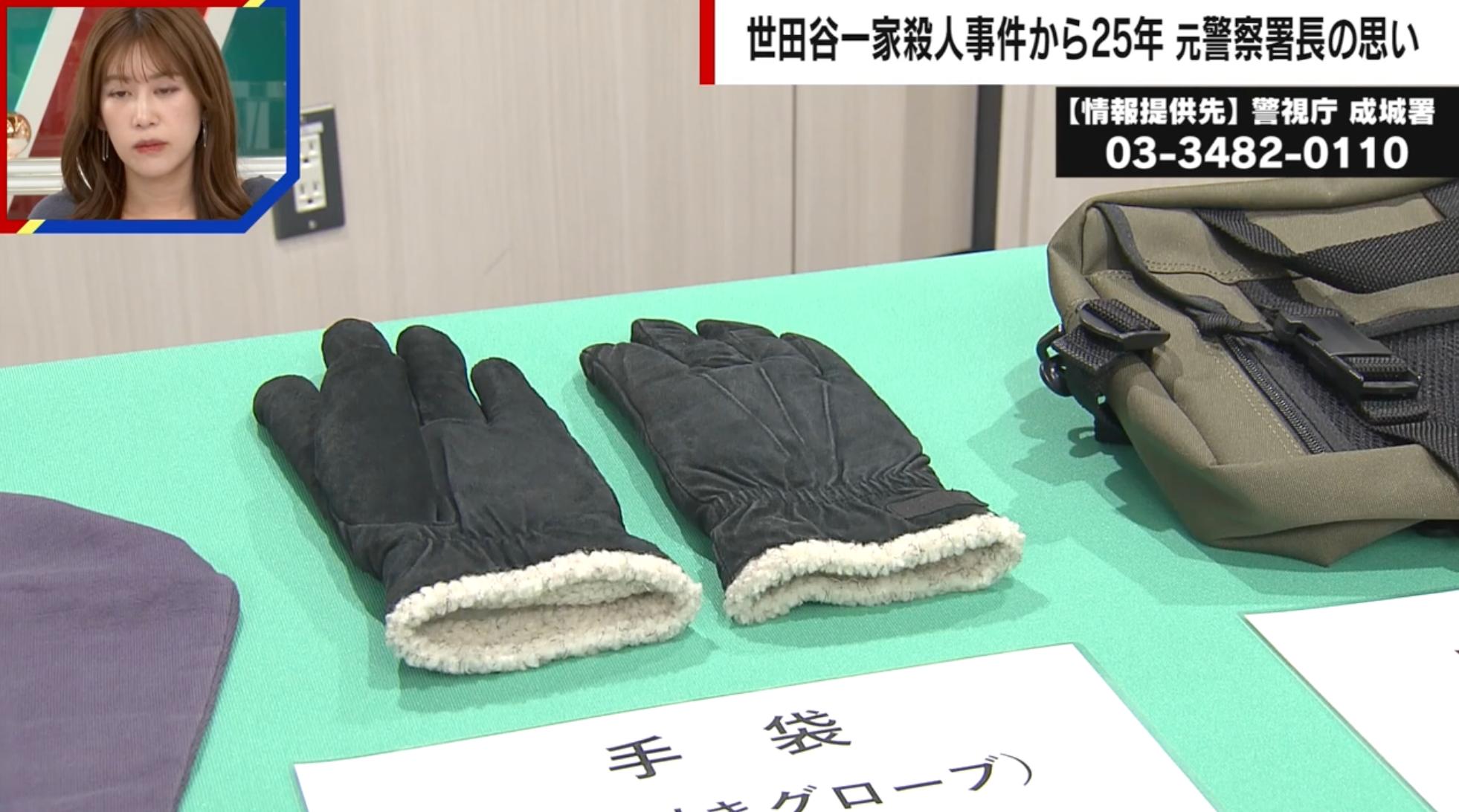
That image captures one of the strangest realities of the case.
The killer’s belongings can be photographed.
Displayed.
Measured.
Compared.
Yet the man who owned them remains unknown.
• • •
There Were Two Black Handkerchiefs
Another unusual piece of evidence involved black handkerchiefs.
Police believe one may have been used in connection with the knife.
One contained a small cut that investigators studied carefully.
The other was folded differently.
Police considered whether it may have been worn around the face.
A fragrance was detected on one of the handkerchiefs.
Investigators identified it as Drakkar Noir.
Again, this was highly specific information.
A particular style of clothing.
A particular shoe.
A particular fragrance.
A particular way of folding cloth.
Each detail seemed capable of narrowing the search.
Together, they still did not reveal the offender.
• • •
Then Came the Most Disturbing Detail
The killer apparently did not flee immediately.
Evidence indicated that he remained inside the Miyazawa home after the murders.
He used things in the house.
He ate food.
He used the family’s computer.
He searched through belongings.
Documents were disturbed.
He appears to have treated his injured hand.
This behavior changed the nature of the mystery.
The offender had just killed four people.
Yet he behaved as though he had time.
Why?
Was he looking for something?
Did he believe nobody would come until morning?
Was he trying to find money?
Documents?
Information?
Or did he simply feel safe enough to remain?
The evidence establishes activity after the killings.
It does not establish what was going through the offender’s mind.
• • •
The Computer Recorded Activity
The family’s computer became another silent witness.
Investigators found evidence that it had been used during the period after the family is believed to have been killed.
That helped reinforce the conclusion that the offender remained inside.
This was not simply someone who entered, attacked the family and immediately ran.
The house remained occupied by the unknown person after the violence.
That detail remains one of the reasons the Setagaya murders are so difficult to forget.
The unanswered question is not only how the killer escaped.
It is why he appeared in no hurry to do so.
• • •
Police Had His Fingerprints
Fingerprints are one of the most recognizable tools in criminal investigation.
They can link a person to a scene with extraordinary specificity.
Police recovered fingerprints attributed to the offender.
They compared them against available records.
They did not get the identity they needed.
Blood evidence created another biological profile.
Again, no publicly identified offender.
Shoe impressions gave investigators physical measurements.
Clothing gave them brands and retail locations.
The bag provided additional identifying characteristics.
And yet no single clue connected the unknown man to a confirmed name.
Investigators are not searching for evidence that the killer existed. They already possess extensive physical evidence from him. They are searching for the person who matches it.
• • •
Police Believe One Man Was Responsible
Investigators considered whether more than one offender could have been involved.
But Tokyo police later stated that the physical evidence pointed toward a single male offender.
One unidentified blood type was attributed to him.
One set of offender shoe impressions was identified.
Police believe he was injured during the attack.
His blood type was A.
Based on clothing and physical evidence, investigators developed estimates of his height and build.
But these were descriptions.
Not identification.
No one has been convicted.
No publicly named suspect has been established as the offender.
• • •
The Search Is Still Active
The Tokyo Metropolitan Police Department continues to seek information.
The case remains publicly listed.
Police still display photographs of clothing and objects associated with the offender.
They continue asking about suspicious people or vehicles seen in the area.
They ask whether anyone remembers someone with an unexplained hand injury around New Year’s Eve 2000.
They ask whether someone suddenly moved away after the murders.
The current combined reward can reach ¥20 million for information contributing to an arrest.
More than a quarter of a century has passed.
The physical evidence remains.
The identity does not.
• • •
Setagaya Murders: Reality Check
Verified: Mikio, Yasuko, Niina and Rei Miyazawa were killed inside their home between late December 30 and the early hours of December 31, 2000.
Verified: Police believe one male offender was responsible.
Verified: Blood attributed to the offender was recovered and identified as type A.
Verified: Fingerprints and footwear impressions attributed to the offender were recovered.
Verified: Clothing, gloves, a hip bag, scarf, shoes and other objects associated with the offender were left behind.
Verified: Only 130 of one sweatshirt type had been sold nationwide before the murders, with only 10 sold in Tokyo.
Verified: Evidence indicates the offender remained inside the house after the killings.
Verified: Tokyo Metropolitan Police are still seeking information about the case in 2026.
Not established: The offender’s motive.
Not established: His confirmed identity.
Still unresolved: Who entered the Miyazawa home and killed the family.
He Left Almost Everything Except His Name
The Setagaya murders are not a mystery created by an empty crime scene.
The house was full of evidence.
Blood.
Fingerprints.
Footprints.
Clothing.
A hat.
Gloves.
A scarf.
Shoes.
A bag.
Handkerchiefs.
A knife.
Computer activity.
And traces showing that the offender himself had been injured.
The police can describe what he wore.
They can describe his approximate build.
They can display objects he handled.
They possess biological evidence from him.
Yet after more than twenty-five years, they still cannot publicly answer one basic question.
Who was the man inside the house after midnight?
• • •
Which Clue Should Have Solved It?
The fingerprints. The blood. The clothing. The shoes. Or the strange behavior after the murders.
Which piece of evidence would you investigate first?
More Mysteries From The Second Envelope
Follow The Second Envelope
Real cases. Real evidence. Questions that still have no answer.
Sources and Image Credits
Tokyo Metropolitan Police Department — official case evidence and continuing investigation
Tokyo Metropolitan Police Department — 2026 English case bulletin
ABEMA TIMES — current photographs of the evidence display
Unresolved — historical house and clothing photographs