25 Menlove Gardens East
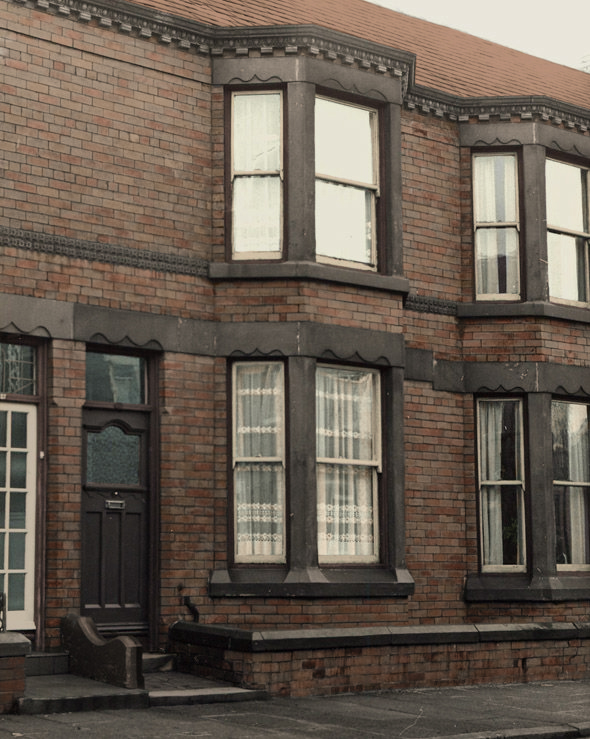
The Julia Wallace murder began with a telephone call for a man who was not there.
It was Monday, January 19, 1931.
William Herbert Wallace was expected at the Liverpool Central Chess Club.
Before he arrived, the telephone rang.
The caller asked for Wallace.
He gave his name as R. M. Qualtrough.
He wanted to discuss insurance.
And he left an address for the following evening.
25 Menlove Gardens East.
There was only one problem.
The street did not exist.
Who invented an address that would send William Wallace across Liverpool on the exact evening his wife was murdered?
• • •
The Julia Wallace Murder Started With a Phone Call
Wallace worked as an insurance agent for the Prudential.
He also played chess.
On Monday evenings he attended the Liverpool Central Chess Club at the City Café in North John Street.
At approximately 7:15 p.m. on January 19, a man telephoned the club looking for him.
Wallace had not yet arrived.
Club captain Samuel Beattie took the message instead.
The caller identified himself as R. M. Qualtrough.
He asked Wallace to visit the following evening at 7:30 p.m.
The address was 25 Menlove Gardens East.
Wallace arrived at the chess club roughly twenty minutes later and was given the message.
He said he did not know Qualtrough.
But a request from a possible insurance customer was not inherently suspicious.
So Wallace kept the appointment.
That decision would place him miles away from home at exactly the time Julia was killed.
• • •
The Address Was Impossible
On Tuesday evening, January 20, Wallace left his home at 29 Wolverton Street in Anfield.
He travelled by tram toward the Menlove Gardens area of Liverpool.
Once there, he began asking for directions.
Menlove Gardens North existed.
Menlove Gardens South existed.
Menlove Gardens West existed.
Menlove Gardens East did not.
Wallace asked residents.
He asked a policeman.
He continued searching.
There was nowhere to go.
At one point he even called at number 25 Menlove Gardens West and asked whether a Mr Qualtrough lived there.
No one by that name did.
The appointment was a trap.
Someone had created it.
The question was whether the trap was designed to give Wallace an alibi — or to remove him from his house.
• • •
Someone Knew Where Wallace Would Be
The telephone call was unusually precise.
The caller knew Wallace’s name.
He knew Wallace was associated with the chess club.
He apparently expected the message to reach him.
And he chose an appointment linked to Wallace’s work as an insurance agent.
Police later traced the call to a public telephone box in the Anfield area, only a short distance from Wallace’s home.
That made the call even more important.
Whoever used the name Qualtrough had been near Wolverton Street.
And whoever made the call may have known enough about Wallace’s routine to predict what he would do next.
• • •
Meanwhile, Julia Was Home Alone
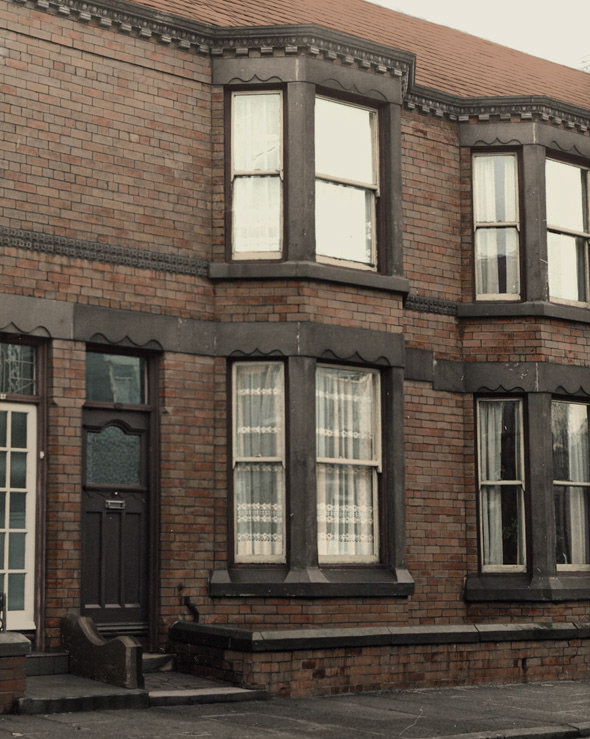
Julia Wallace remained at 29 Wolverton Street.
She and William had lived there for years.
The house was a narrow Liverpool terrace.
The front parlour faced the street.
It was there that Julia would later be found.
At some point after Wallace left, someone entered the house.
There was no clear evidence of a forced entry.
Julia was struck repeatedly in the head with a heavy object.
The murder weapon was never conclusively identified.
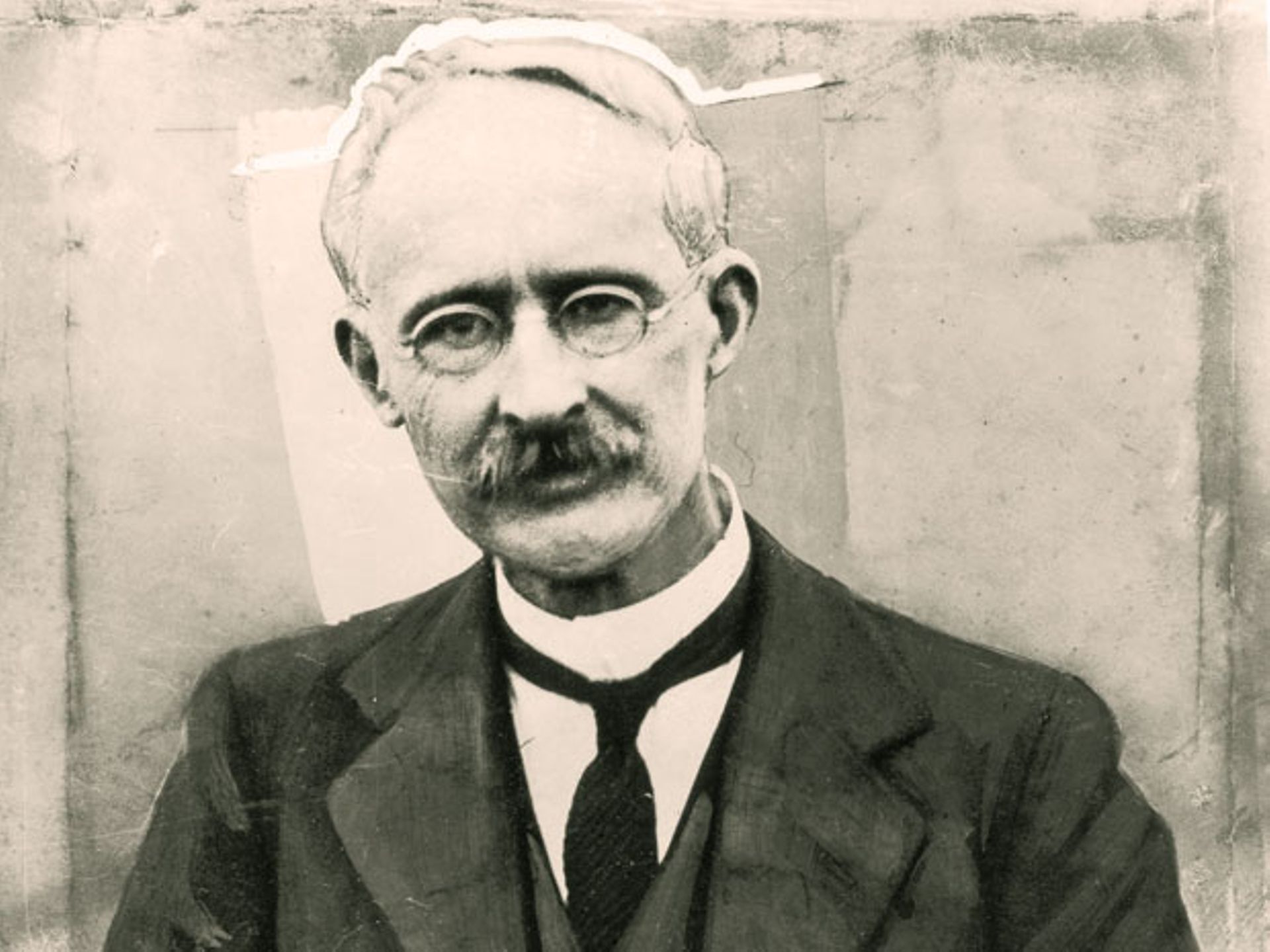
Nothing about the case provided an easy answer.
If a stranger had entered, how had that person persuaded Julia to let them inside?
If the motive was robbery, why had the scene unfolded as it did?
And if Wallace had killed his wife before leaving, could he really have committed the murder, cleaned himself sufficiently, and reached the tram system in time?
The entire prosecution would eventually depend on questions of minutes.
• • •
Wallace Came Home
After failing to locate the nonexistent address, Wallace travelled back to Wolverton Street.
He had difficulty getting into the house.
He tried the doors.
Nearby neighbours, John and Florence Johnston, encountered him outside.
Wallace eventually entered through the rear.
Inside, the house was dark.
He went into the front parlour.
Julia was lying near the fireplace.
She was dead.
Police were called.
The investigation immediately focused on the strange journey Wallace had just completed.
It seemed almost too convenient.
A mystery caller had sent the husband away.
The address did not exist.
And while Wallace was visibly searching for it, his wife was killed.
• • •
Police Tested the Clock
Investigators attempted to determine whether Wallace could have committed the murder before catching his tram.
Police officers retraced his route.
They timed the walk.
They timed the tram connections.
They calculated how late Wallace might have left Wolverton Street and still reached the point at which witnesses later saw him.
The timing was tight.
But police believed it was possible.
That became central to their theory.
They believed Wallace himself could have made the Qualtrough call the previous evening.
Then, according to the prosecution theory, he could have murdered Julia before beginning the highly visible journey to search for Menlove Gardens East.
Every person Wallace stopped to ask for directions would then strengthen his apparent alibi.
It was an elegant theory.
But elegant is not the same as proven.
• • •
The Case Against Wallace
Police arrested William Wallace.
He was charged with murdering Julia.
The prosecution argued that the Qualtrough appointment was part of a carefully constructed plan.
The nonexistent address would place Wallace far from home.
His repeated requests for directions would create witnesses.
And the telephone call would make the journey appear to have been arranged by somebody else.
But the prosecution had serious problems.
There was no eyewitness to the murder.
No murder weapon was conclusively tied to Wallace.
There was no decisive forensic evidence proving that he had attacked Julia.
And the available timeline was extremely narrow.
Nevertheless, in April 1931, a jury found him guilty.
Wallace was sentenced to death.
• • •
Then the Verdict Collapsed
Wallace appealed.
In May 1931, the Court of Criminal Appeal reviewed the case.
The judges concluded that the evidence did not adequately support the guilty verdict.
The conviction was quashed.
Wallace walked free.
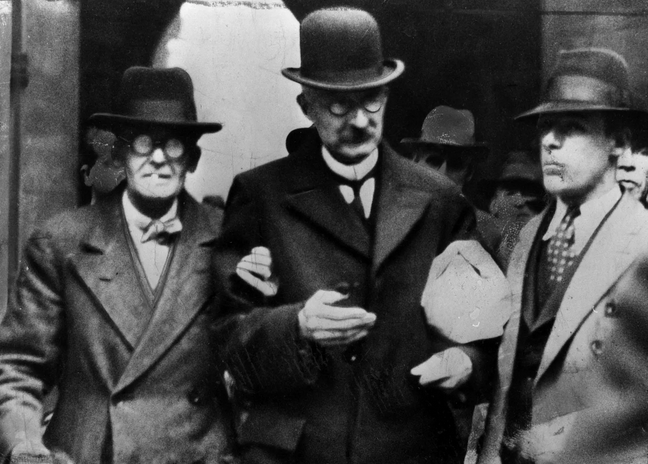
He was not retried.
No one else was ever convicted.
The Julia Wallace murder remained unsolved.
And that meant the most important question returned to the beginning of the story.
Who made the telephone call?
• • •
What Did Qualtrough Want?
The name R. M. Qualtrough has become inseparable from the case.
But there is no confirmed person behind it.
If Wallace made the call himself, then the address may have been the foundation of an elaborate alibi.
If somebody else made it, then that person deliberately removed Wallace from the house.
That second possibility raises another question.
Why?
Was the intention always to murder Julia?
Was robbery the original plan?
Did someone who knew Wallace’s insurance work believe money would be kept inside the house?
Did Julia recognize whoever entered?
No theory has conclusively answered all of those questions.
• • •
The House Became Part of the Puzzle
There was no obvious forced entry.
That has always mattered.
Julia may have opened the door to someone she knew.
Or to someone who gave her a believable reason to enter.
An insurance connection could have worked.
A person asking for Wallace might have worked.
So might a familiar face.
The front parlour contained the violent scene.
Elsewhere, investigators found signs that money may have been taken from Wallace’s insurance cash box.
But the apparent robbery did not resolve the mystery.
It only created another possible motive.
• • •
A Murder Built Around Time
The Wallace case is sometimes described as an impossible murder because nearly every theory runs into the clock.
If Wallace killed Julia, he needed enough time to commit the attack and leave the house without obvious blood contamination before reaching his tram.
If another person killed Julia, that attacker needed to enter during Wallace’s absence, commit the murder, and disappear before Wallace returned.
And whoever made the Qualtrough call had already set the entire sequence in motion the night before.
That is what makes the case different from an ordinary unidentified intruder murder.
The killer — whoever it was — may have planned not only the murder but Wallace’s movements.
• • •
Julia Wallace Murder: Reality Check
Verified: Julia Wallace was murdered at 29 Wolverton Street, Liverpool, on January 20, 1931.
Verified: The previous evening, a caller using the name R. M. Qualtrough left a message for William Wallace at his chess club.
Verified: The caller gave the address 25 Menlove Gardens East.
Verified: Menlove Gardens East did not exist.
Verified: Wallace travelled to the Menlove Gardens area and openly asked multiple people for directions.
Verified: Julia was found murdered when Wallace returned home.
Verified: Wallace was convicted and sentenced to death.
Verified: His conviction was quashed by the Court of Criminal Appeal in May 1931.
Verified: No one else was convicted of Julia Wallace’s murder.
Not established: Who made the Qualtrough telephone call.
Not established: Whether the call was designed as an alibi or to lure Wallace away.
Still unresolved: Who murdered Julia Wallace.
The Address Still Does Not Exist
The Julia Wallace murder has survived for almost a century because it begins with something so small.
A telephone rings.
A stranger gives a name.
He leaves an address.
A man writes it down.
The following evening he goes looking for it.
And while he searches, his wife dies.
The husband was convicted.
Then cleared.
The caller disappeared.
The murder remained unsolved.
And the address at the center of everything was never real.
So who needed William Wallace to go to 25 Menlove Gardens East?
• • •
What Does the Call Tell You?
Was the false appointment created to build an alibi — or to empty the house?
Who do you think the caller expected to benefit?
More Mysteries From The Second Envelope
Follow The Second Envelope
Real cases. Real evidence. Questions that still have no answer.
Sources and Image Credits
Liverpool City Police history — Julia Wallace murder
William Herbert Wallace case archive — trial transcript
William Herbert Wallace case archive — appeal proceedings
Case archive — crime scene and location photographs