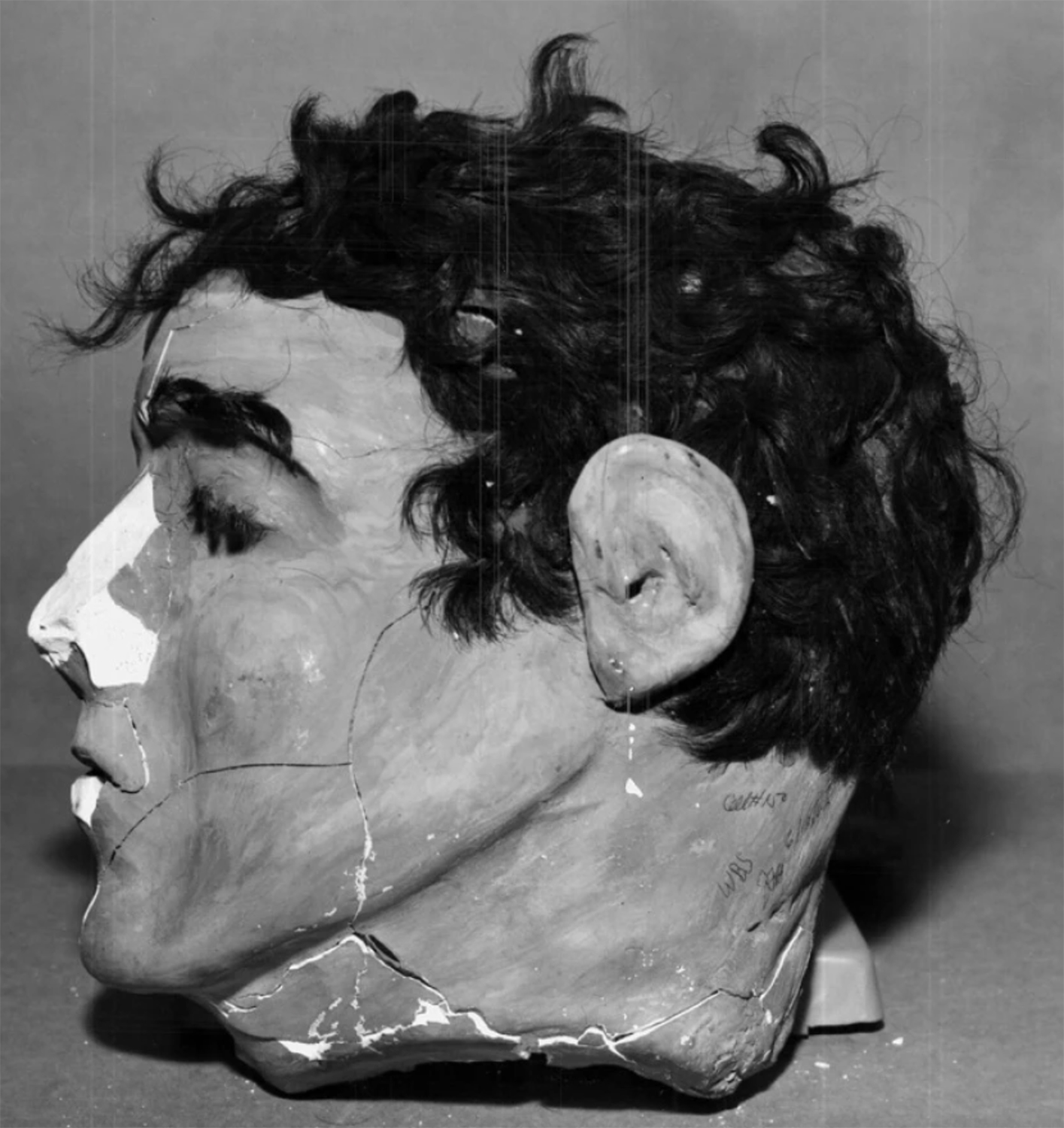
The Alcatraz escape mystery began when a prison guard touched Frank Morris’s head and watched it fall from the pillow.
Three Men Escaped Alcatraz Then the Ocean Kept Their Secret
They left behind fake heads, holes in concrete walls, a handmade raft, and a question that has survived for more than six decades.

Chapter One
The Alcatraz Escape Mystery Began With a Head That Moved
The guard reached through the bars and pushed the head resting on Frank Morris’s pillow.
It rolled from the bed and struck the floor.
Its nose broke.
Only then did the guard understand that the face was not human.
It had been made from plaster, flesh-colored paint, and real hair collected from the prison barbershop.
Beneath the blanket was no body.
Frank Morris was gone.
So were brothers John and Clarence Anglin.
The morning count on June 12, 1962, had uncovered what Alcatraz was designed to prevent.
Three prisoners had escaped from the Rock.
Alcatraz stood alone in the cold waters of San Francisco Bay.
Guards watched from towers. Prisoners were counted repeatedly. Strong currents and low water temperatures formed a second wall beyond the concrete and steel.
Between 1934 and the prison’s closure in 1963, thirty-six men attempted fourteen separate escapes.
Nearly all were caught or did not survive.
Morris and the Anglin brothers created the exception that investigators could never completely explain.
The Alcatraz escape mystery did not begin in the water.
It began months earlier, behind the walls of three neighboring cells.
Chapter Two
The Workshop Above the Cells
Frank Morris had a history of escaping prisons.
John and Clarence Anglin had known him before arriving at Alcatraz.
A fourth prisoner, Allen West, joined their plan.
According to the FBI investigation, the group began preparing in December 1961 after finding old saw blades.
Each cell had a small ventilator opening near the floor.
The men slowly widened those openings by drilling closely spaced holes through the surrounding concrete.
Their tools were crude.
One homemade drill used the motor from a broken vacuum cleaner.
Blankets and prison noise helped hide the sound.
False ventilator grilles concealed the damaged walls during inspections.

Behind the cells was an unguarded utility corridor.
Once the men entered it, they could climb through pipes and reach a concealed space above the cell block.
That space became their workshop.
They built wooden paddles.
They converted a musical instrument into a device that could inflate a raft.
They collected more than fifty prison raincoats and transformed them into life vests and a rubber raft measuring approximately six by fourteen feet.
The seams were stitched and sealed using heat from the prison’s steam pipes.
At the same time, the men made the heads that would sleep in their beds after they left.
Every part of the plan depended on guards seeing what they expected to see.
A grille covering a wall.
A prisoner sleeping beneath a blanket.
A prison from which no one could escape.
Chapter Three
The Night They Left the Rock
On the evening of June 11, the men placed the dummy heads in their beds.
Morris and the Anglin brothers moved through the openings behind their cells.
Allen West could not remove his ventilator grille in time.
The others left without him.
They gathered their equipment, climbed through the utility corridor, and reached the top of the cell block.
From there, they forced open a ventilator and reached the prison roof.
They descended near the bakery, crossed fences, and moved toward the northeastern shore of the island.
Sometime that night, they launched the handmade raft into San Francisco Bay.
That is the last point in the Alcatraz escape mystery that investigators could reconstruct with confidence.
Beyond the shore was darkness.
Cold water.
Strong currents.
And a route that may have led toward Angel Island and Marin County—or into open water.

Chapter Four
Seven Real Clues the Escapees Left Behind
1. The dummy heads
The heads proved that the escape had required time, access to materials, and careful observation of the guards’ routines.
They also bought the men several critical hours before the alarm was raised.
2. The openings behind the cells
The widened ventilator openings showed how the men reached the utility corridor without passing through the cell doors.
False grilles had hidden the work from guards.
3. The secret workshop
Above the cell block, investigators found evidence of the space where the raft, paddles, tools, and life vests had been constructed.
4. The raincoat raft
The raft itself was never recovered intact.
Pieces of rubber inner tube and a homemade life vest were later found in or near the bay.
Those discoveries proved that part of the escape equipment reached the water.
They did not prove who remained with it.
5. The wooden paddle
Investigators recovered paddle-like pieces of wood.
A similar paddle was found on Angel Island, more than a mile from Alcatraz.
It suggested a possible direction but could not establish that the men reached land.
6. The packet sealed in rubber
Within two days of the escape, investigators recovered a packet of letters sealed inside rubber and connected to the prisoners.
Like the other debris, it showed that belongings entered the bay.
It could not reveal whether the men had survived the crossing.
7. What was never found
Investigators found no confirmed bodies.
They found no verified escape vehicle.
Allen West said the plan involved stealing clothes and a car after reaching land, but investigators found no thefts that could be conclusively tied to the men.
No credible evidence emerged during the FBI’s investigation proving that the escapees were living in the United States or abroad.
Yet the absence of proof that they lived was not proof that they died.
That contradiction is the heart of the Alcatraz escape mystery.
Final Chapter
Did the Three Men Survive?
The FBI concluded that the odds were against the men.
The water was cold, the currents were strong, and the raft had been made from stolen raincoats inside a prison workshop.
The men had no confirmed transportation or support waiting on shore.
But the FBI never recovered evidence that conclusively proved they drowned.
People have demonstrated that the distance between Alcatraz and nearby land can be crossed.
The unanswered question is whether Morris and the Anglin brothers crossed it that night, under those conditions, using equipment built in secret.
On December 31, 1979, the FBI closed its investigation and transferred responsibility to the United States Marshals Service.
The Marshals Service continues to list Frank Morris, John Anglin, and Clarence Anglin as wanted for the escape.
If alive today, all three would be extraordinarily old.
The passage of time has reduced the possibility of an arrest.
It has not produced an answer.
The Alcatraz escape mystery remains suspended between two stories.
In one, three men built an extraordinary plan only to disappear beneath the bay.
In the other, they reached the shore and achieved what Alcatraz was created to make impossible.
The evidence can lead readers toward either ending.
It cannot make either one certain.
The first thing the guards found was a face without a man. More than sixty years later, the case still has three men without an ending.
The next real case is coming
Follow The Second Envelope
Follow our Facebook page for real crime mysteries, official evidence, unsolved disappearances, and the clues investigators still cannot explain.
More Real Crime Mysteries
Read how an unidentified hijacker jumped from a plane carrying $200,000 in The Man Who Jumped From a Plane—and Vanished .
Explore the unexplained disappearance of a young woman aboard a Caribbean cruise ship in She Vanished From a Cruise Ship Before Sunrise .
Visit The Second Envelope for more real cases, hidden evidence, and unresolved mysteries.
About the Alcatraz Escape Mystery
This article recounts a documented prison escape using information and real evidence images published by the FBI, National Park Service, and United States Marshals Service. The survival of the escapees has never been conclusively established.
FBI Vault: Alcatraz Escape Records
U.S. Marshals Service: Frank Morris
U.S. Marshals Service: John Anglin