Rockingham, Western Australia · October 1997 · Real Unsolved Case
In 1997, an 11 Year Old Walked Toward a Comic Shop He Never Arrived
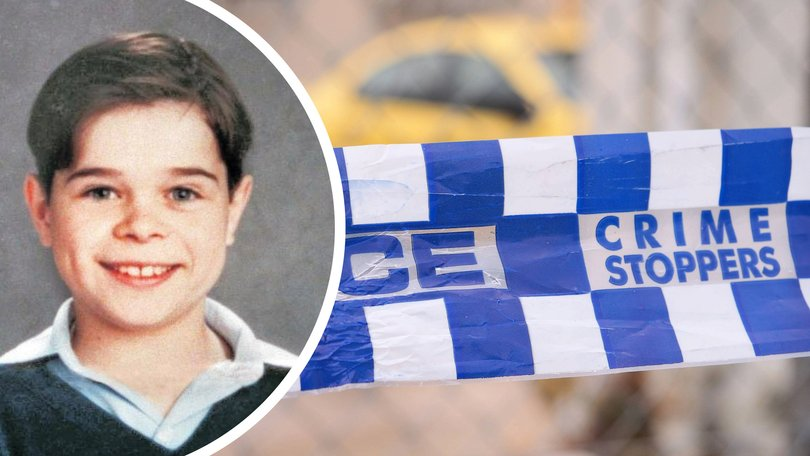
The Gerard Ross murder began with a walk that should have taken only minutes. His brother went ahead on rollerblades. Gerard was supposed to meet him at the shops. He never arrived.

Chapter One
The Gerard Ross Murder Began With an Ordinary Walk
Rockingham, Western Australia. October 14, 1997.
By that afternoon, a coastal holiday city was hearing the same frightening news.
An 11 year old boy had disappeared.
Not from a distant forest.
Not from an isolated road.
He had vanished during a short walk toward the local shops.
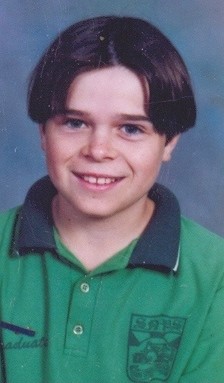
Gerard James Ross lived with his parents and siblings in Newman, more than a thousand kilometres north of Perth.
The family had arrived in Rockingham on October 11 for a holiday and was staying in accommodation on Kent Street.
Gerard was quiet, reserved and well liked by his friends.
On the morning of Tuesday, October 14, he and his older brother left their accommodation at approximately 9:30.
They were heading toward a nearby shopping centre, where they planned to visit a comic shop.
His brother was wearing rollerblades.
Gerard was walking.
The difference in speed was ordinary enough.
His brother skated ahead on Kent Street, and the two agreed to meet at the shopping centre.
Gerard was last seen several houses away from the place where the family was staying.
His brother continued toward the shops.
Gerard never appeared behind him.
Somewhere along an ordinary suburban street, a short family holiday became an unsolved mystery.
By approximately one o’clock that afternoon, Gerard had been reported missing to police.
The search was beginning.
Chapter Two
Rockingham Started Looking
The first hours offered possibilities that every family of a missing child wants to believe.
Perhaps Gerard had become distracted.
Perhaps he had taken another route.
Perhaps somebody had seen him and simply had not heard that police were searching.
But the hours passed.
The following day, a ground search was underway.
By October 16, roughly 150 police officers and volunteers were searching beaches and scrubland around Rockingham.
Police went door to door.
Homes and backyards along Kent Street were checked.
Missing-person flyers began appearing through letterboxes.
Aircraft equipped with infrared cameras searched bushland at night.
Water police searched the waterways around Rockingham.
The Navy on nearby Garden Island joined the effort.
What had begun as a missing child search was becoming something much darker.
Police increasingly feared that Gerard had not wandered away.
The city had been given one of the most difficult mysteries imaginable:
How could a child disappear during such a short walk in daylight without anyone being able to say what happened?
Chapter Three
Fourteen Days Later
October 28 arrived exactly two weeks after Gerard disappeared.
About 20 kilometres from Rockingham, a man exercising a horse noticed something near a limestone track in the Karnup Pine Plantation.
Police were called.
Gerard had been found.
He was no longer a missing child.
The investigation was now a homicide investigation.
Authorities have deliberately kept some details of Gerard’s death from the public, and there is no need to reproduce graphic details here.
What matters to the mystery is what investigators could establish and what they could not.
Gerard was found fully clothed.
Money remained in his back pocket.
One familiar object, however, was missing.
The blue New York Yankees baseball cap he had been wearing when he disappeared was nowhere to be found.
It has never been recovered.
The object that vanished too
Gerard was found. The blue Yankees cap he had been wearing was not.
Chapter Four
The Blue Cap Became Part of the Gerard Ross Murder Mystery
Months later, police made another public appeal about Gerard’s cap.
Investigators hoped that somebody might remember seeing it.
Perhaps it had been discarded somewhere.
Perhaps somebody had seen a similar item at a location that suddenly seemed important.
What happened to the cap has never been publicly established.
There were other questions.
In 1998, a woman came forward saying she had seen two men struggling with a boy on the day Gerard disappeared.
The report could not provide the final answer investigators needed.
Police also sought the driver of a beige or cream-coloured sedan connected to a separate incident on Kent Street a few weeks before Gerard vanished.
An 11 year old boy had reportedly been approached by the driver and offered a lift.
The boy declined.
Police stressed that they wanted to identify the driver so he could be spoken to and, if appropriate, eliminated from the investigation.
The driver was never publicly identified.
Dog hairs found during the investigation created another forensic question.
Investigators pursued the evidence, but no publicly announced result transformed it into an identification.
Chapter Five
Thousands of Pieces of Evidence But No Name
The size of the Gerard Ross murder investigation makes the absence of an answer especially difficult to understand.
By 2017, WA Police said investigators had collected more than 5,000 pieces of physical evidence.
Nearly 1,200 witnesses had been spoken to.
A cold-case review begun in 2014 led investigators to identify several new persons of interest.
But a person of interest is not a convicted offender, and none of those developments resulted in a publicly confirmed solution.
In 2019, police began another extensive review.
At the time, authorities described it as the second largest investigation in Western Australian history.
Detectives went back through evidence.
Old leads were examined again.
Suspects and persons of interest were reconsidered.
Investigators hoped that advances in forensic science and changes in relationships and loyalties over time might persuade somebody to finally speak.
In 2020, the Western Australian Government increased the reward to as much as $1 million for information leading to the apprehension and conviction of whoever was responsible.
Crime Stoppers Western Australia continues to list the case among its open cold cases with the $1 million reward.
Final Chapter
The Walk Still Has a Missing Middle
Almost every important part of Gerard’s morning can be placed on a timeline.
The family was staying on Kent Street.
The brothers left at approximately 9:30.
His brother skated ahead.
They planned to meet at the shops.
Gerard was seen walking only a short distance from the accommodation.
Then the timeline breaks.
Fourteen days later, it starts again 20 kilometres away.
That missing section may have lasted only minutes.
Yet after decades of investigation, thousands of pieces of evidence and more than a thousand witness interviews, those minutes have never been fully reconstructed in public.
Somebody may have seen a vehicle.
Somebody may remember a person behaving differently that day.
Somebody may know why the cap disappeared.
Or the decisive clue may already exist somewhere inside the enormous case file, waiting to be understood in a different way.
The Gerard Ross murder remains unsolved.
No person has been convicted of Gerard’s abduction and murder.
And the question that shocked Rockingham in 1997 is still waiting for an answer.
Gerard’s brother reached the shops. Gerard never did. Somewhere between those two points lies the answer police have been searching for since 1997.
Another real mystery is coming
Follow The Second Envelope
Real cases. Small towns. Strange evidence. Missing people. And mysteries that still have no ending.
More Real Mysteries
In another 1997 mystery, a runner disappeared outside a Wyoming town and left her car behind. Read the Amy Bechtel disappearance .
A young woman later vanished from a Caribbean cruise ship before sunrise in the Amy Bradley disappearance .
Crime Stoppers Western Australia: Gerard James Ross
Government of Western Australia: $1 Million Gerard Ross Reward
ABC News: Gerard Ross Investigation Timeline