In 1900, 3 Lighthouse Keepers Vanished From a Remote Scottish Island. Their Coats and Storm-Damaged Gear Were Left Behind

The Flannan Isles lighthouse mystery began in December 1900 when a light that should have been visible across the dark Atlantic failed to appear.
A passing ship noticed something was wrong.
The lighthouse on the remote Scottish island of Eilean Mòr was dark.
Eleven days later, on December 26, the relief vessel Hesperus finally reached the island.
The crew expected three lighthouse keepers to be waiting.
Instead, nobody appeared.
A rocket was fired from the ship.
No answer.
A horn sounded.
Still nothing.
Relieving keeper Joseph Moore went ashore and climbed the steep path toward the lighthouse.
Inside, he found no sign of the three men.
James Ducat was gone.
Thomas Marshall was gone.
Donald McArthur was gone.
The lighthouse itself had not been abandoned in chaos.
The lamp had been prepared.
Routine work appeared to have been completed.
But all three men had vanished from an island surrounded by the cold Atlantic.
Why would all three experienced keepers leave the safety of the lighthouse at the same time, and what happened once they went outside?
• • •
The Flannan Isles Lighthouse Mystery Began on Eilean Mòr
The Flannan Isles sit off the west coast of Scotland in the Outer Hebrides.
The rocky island group is remote, exposed and surrounded by dangerous Atlantic water.
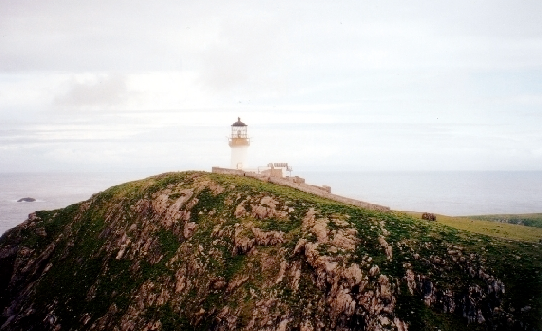
The lighthouse stands on Eilean Mòr, the largest of the islands.
At the beginning of the 20th century, the job of a lighthouse keeper there demanded patience and discipline.
There was no modern radio connection allowing the men to speak instantly with people on the mainland.
A shore observer watched for the distant light and reported if something appeared wrong.

In December 1900, three men were responsible for keeping the light operating.
Principal Keeper James Ducat.
Second Assistant Thomas Marshall.
And Donald McArthur, an experienced occasional keeper who was temporarily replacing another man who was ill.
All three understood the island.
They understood rough weather.
They understood the danger of working near the sea.
Yet sometime on December 15, all three appear to have left the lighthouse.
None of them returned.
• • •
The Lighthouse Was Empty, But Their Work Had Been Done
One of the strangest elements of the Flannan Isles lighthouse mystery is that the station did not look as though the keepers had simply abandoned their responsibilities.
The surviving records suggested that normal work had continued.
The official Northern Lighthouse Board account says the final permanent log entries were dated December 13.
However, information for December 14 and weather observations from the morning of December 15 had been written on a slate.
Those notes were waiting to be transferred into the permanent log.
The lamp had also been prepared for use.
That matters.
It suggests the keepers expected to continue doing their jobs.
They did not appear to be planning to leave the island.
Something seems to have happened suddenly.
The men seem to have prepared for another ordinary day. Then all three disappeared.
If they went outside voluntarily, something must have drawn them away from the lighthouse.
The strongest physical evidence was found near the sea.
• • •
Storm Damage at the West Landing Offered a Major Clue
Investigators inspected the island after the men disappeared.
Near the west landing, they found signs of violent weather and powerful waves.
A box used to store mooring ropes and other equipment had disappeared.
Ropes had been washed out and were lying among the rocks.
Iron railings had been pulled from their foundations and damaged.
Another handrail associated with securing mooring equipment had been carried away.
The destruction demonstrated how powerful the sea had been around the island.

This damage became central to the official explanation.
Perhaps one or more keepers went down toward the west landing to inspect equipment.
Maybe they were trying to secure ropes before the sea carried them away.
Perhaps equipment had already broken loose and created an emergency.
Then an unexpectedly large wave struck.
If the men were near the edge of the landing, the sea could have taken them almost instantly.
But one question remained.
Why were all three men outside?
• • •
One Keeper’s Coat Was Still Inside
The clothing left at the station offered another clue in the Flannan Isles lighthouse mystery.
The official investigation examined what the men appeared to have worn before disappearing.
Thomas Marshall apparently took his sea boots and oilskins.
James Ducat also appears to have taken outdoor clothing suitable for working in bad conditions.
Donald McArthur was different.
His usual outer coat remained behind.
That detail suggests he may have left the building quickly.
Perhaps Ducat and Marshall were already outside.
Perhaps McArthur saw something from the lighthouse.
Maybe he heard a shout.
Maybe he realized the others were in trouble.
If so, he may have run outside without stopping to dress properly.
Donald McArthur’s usual outer coat remained inside, while the other two men appear to have dressed for work outdoors.
It is a small detail.
But it could indicate that events unfolded very quickly.
Unfortunately, it does not tell us exactly what McArthur saw or why he left.
• • •
Could One Enormous Wave Have Taken All 3 Keepers?
Robert Muirhead, a Northern Lighthouse Board superintendent, investigated the disappearance.
He knew the lighthouse and the men.
His conclusion was straightforward and grim.
He believed the three keepers had probably gone toward the west landing.
There, they may have been caught by an unexpectedly large wave and swept into the Atlantic.
The storm damage supported that explanation.
It also explained why no bodies were found inside the lighthouse or elsewhere on the island.
But the theory could not answer every question.
Why would three experienced keepers expose themselves at once?
Why would nobody remain inside?
Had one man gone into danger first?
Did the other two rush to help?
Did loose equipment create a sudden emergency?
Or was the sequence completely different?

Looking at the exposed cliffs, the official theory is not difficult to imagine.
The Atlantic did not need anything supernatural.
It only needed one enormous wave at exactly the wrong moment.
• • •
Later Retellings Made the Disappearance Much Stranger
Over the decades, the story grew.
New details appeared in books, articles and popular retellings.
Some versions described an unfinished meal.
Others mentioned an overturned chair.
There were claims of disturbing logbook entries describing terrified men, strange storms and unusual behavior.
Later theories suggested murder.
Madness.
Sea monsters.
Supernatural forces.
But dramatic details repeated in later versions should not automatically be treated as verified evidence.
The Northern Lighthouse Board’s historical account is less theatrical.
It records three missing men.
It describes the state of the lighthouse.
It records clothing left behind.
It documents serious damage near the west landing.
And it preserves the contemporary conclusion that the men were probably swept into the sea.
The documented version is already mysterious enough.
• • •
Flannan Isles Lighthouse Mystery: Reality Check
Verified: Three lighthouse keepers disappeared from Eilean Mòr in December 1900.
Verified: They were James Ducat, Thomas Marshall and Donald McArthur.
Verified: The relief vessel Hesperus reached the island on December 26 and found the station without its keepers.
Verified: The lighthouse lamp had been prepared and routine work appeared to have been completed.
Verified: Significant storm damage was found near the west landing.
Verified: Donald McArthur’s usual outer coat remained at the station.
Official conclusion: The investigators believed the three men were probably swept into the sea by an unusually large wave.
Not established: Murder, supernatural activity, sea monsters or the dramatic logbook scenes found in some later retellings.
Still unknown: No eyewitness survived to establish exactly why all three men went outside or the precise sequence of their final moments.
One Emergency Could Explain the Flannan Isles Lighthouse Mystery
The simplest scenario remains one of the most convincing.
Ducat and Marshall may have gone outside to inspect damaged equipment near the west landing.
McArthur may have remained inside.
Then something happened.
A shout.
A rope breaking.
A keeper losing his footing.
An unexpected wave.
Something urgent enough for McArthur to run outside without putting on his usual coat.
If one man had already been caught near the water, the others may have tried to help.
Then another wave arrived.
If all three were close to the edge, there may have been almost no time to react.
The sea could have removed both the men and much of the evidence.
It is a reasonable explanation.
But reasonable is not the same as proven.
There was no survivor.
No final message explained what happened.
No bodies were recovered to settle the sequence of events.
That is why the Flannan Isles lighthouse mystery continues to attract attention more than a century later.
The lighthouse still stands on Eilean Mòr.
Its light still reaches across the water.
But the three men who kept it burning in December 1900 never came home.
• • •
What Do You Think?
The damaged equipment strongly suggests the sea played a role.
But the biggest question remains:
Why do you think all three lighthouse keepers went outside at the same time?
More Mysteries From The Second Envelope
Follow The Second Envelope
For real mysteries, unexplained clues and original stories with unexpected turns, follow The Second Envelope on Facebook.
Sources
Northern Lighthouse Board: Flannan Isles Historical Account
Northern Lighthouse Board: Flannan Islands Lighthouse
Wikimedia Commons: Eilean Mòr Lighthouse Image
Wikimedia Commons: Historical Flannan Isles Image
Wikimedia Commons: Eilean Mòr Photograph
Wikimedia Commons: Lighthouse and Cliffs Photograph